TBS Solution – The Hub of Solutions

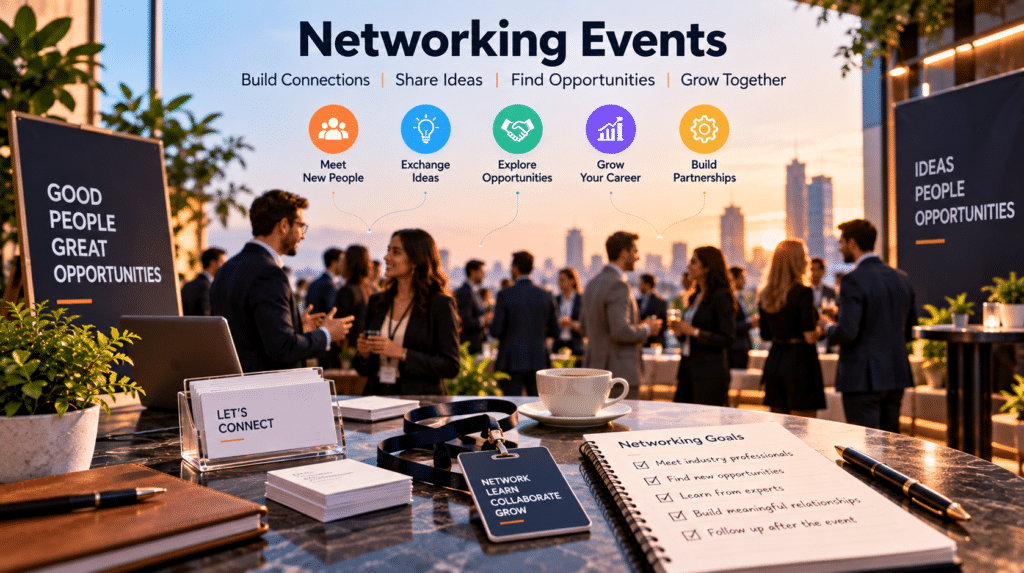
Networking Events: Build Connections & Find Opportunities

Networking Events: Build Connections & Find Opportunities
Networking events are more than rooms filled with business cards, introductions, and awkward small talk.

Done well, they can help you meet potential clients, discover career opportunities, exchange knowledge, find mentors, develop partnerships, and build relationships that continue long after the event ends.

But attending a networking event and actually networking effectively are two different things.

Showing up without a goal, talking only about yourself, collecting dozens of contacts, and never following up rarely creates meaningful results. Successful networking is less about how many people you meet and more about building relationships that provide value to both sides.

This guide explains what networking events are, how to prepare for them, how to start conversations, what to say, how to follow up, and how to turn professional connections into long-term opportunities.

What Are Networking Events?

A networking event is a gathering designed to help people meet, communicate, exchange information, and develop professional relationships.

These events can take many forms, including:

  • Business networking events
  • Professional networking events
  • Industry conferences
  • Trade shows
  • Networking meetups
  • Career networking events
  • Entrepreneur networking events
  • Small business networking events
  • Corporate networking events
  • Online networking events
  • Virtual networking events
  • Industry-specific meetups

The format can also vary. Some events are structured around presentations or panel discussions, while others use informal conversations, workshops, speed networking, or roundtable discussions.

The purpose is usually the same: create opportunities for people to connect around shared professional interests.
Networking itself is fundamentally about developing mutually beneficial relationships rather than simply collecting contacts.

Why Are Networking Events Important?

Networking events offer value beyond immediate business opportunities.

A useful professional network can provide access to:

  • Industry knowledge
  • New clients
  • Business partnerships
  • Career opportunities
  • Referrals
  • Mentorship
  • Expert advice
  • New ideas
  • Potential investors
  • Suppliers and service providers
  • Collaborative projects

However, networking should not be treated as a transactional activity.

If every conversation begins with “What can this person do for me?”, people can quickly sense the lack of genuine interest.

A stronger approach is to ask:

“How can we create value for each other?”

That mindset makes networking more natural and helps build relationships that can develop over time.

How to Prepare for a Networking Event

Preparation can significantly improve the quality of your conversations.
Before you go, spend a few minutes defining what you want from the event.
1. Set a Clear Goal
Your goal could be to:

  • Meet potential customers
  • Find business partners
  • Learn about an industry
  • Explore career opportunities
  • Meet other entrepreneurs
  • Find mentors
  • Build relationships with professionals in your field
Don’t create a goal like “meet everyone.”

Instead, create a measurable objective such as:

“I want to have five meaningful conversations with people working in my target industry.”

That gives you direction without turning the event into a numbers game.
2. Research the Event
Find out:

  • Who is attending?
  • Who is speaking?
  • What industries are represented?
  • What topics will be discussed?
  • Is there an attendee directory?
  • Are there specific networking sessions?
This helps you identify people you genuinely want to meet.
3. Prepare Your Introduction
You don’t need a complicated elevator pitch.

A simple introduction should explain:

Who you are + What you do + Who you help

For example:
“I work in digital growth and help businesses improve their online presence through SEO and technology.”
Then ask the other person a question.
That’s much more conversational than delivering a long sales pitch.

How to Network at an Event

Once you’re at the event, the goal isn’t to talk continuously.
It’s to start useful conversations.
Start With Simple Questions
Instead of immediately asking someone what they do, try questions connected to the event:

  • “What brought you to this event?”
  • “Which session have you found most useful?”
  • “What kind of work are you involved in?”
  • “Have you attended this event before?”
  • “What are you currently working on?”
These questions give people an easy way to respond.
Listen More Than You Talk
One of the most underrated networking skills is listening.
Don’t spend the entire conversation waiting for your turn to speak.

Listen for:

  • Their current challenges
  • Their interests
  • Their goals
  • Their industry
  • Problems you may be able to help with
  • People they may want to meet
Good networking conversations feel like conversations not sales presentations.
https://localiq.co.uk/blog/seo/what-is-non-commodity-content

How to Make Meaningful Connections

Meeting someone once doesn’t automatically create a relationship.
The real value comes from what happens afterwards.
During the conversation, look for something specific you can remember.

For example:

“You mentioned you’re expanding into the UK market.”

That detail gives you something useful to reference later.
If appropriate, connect on LinkedIn or exchange contact information.
But don’t immediately turn every connection into a sales opportunity.
A better first follow-up might say:

“Great meeting you at the event. I enjoyed our conversation about expanding into the UK market.”

Personalised follow-ups are much more meaningful than generic messages.

How to Follow Up After Networking Events

Follow-up is where many networking opportunities disappear.
You can meet someone interesting at an event and then never contact them again.
A simple follow-up system can prevent that.
Within 24–48 Hours
Send a short, personalised message.
Mention:

  1. Where you met
  2. Something you discussed
  3. Why you enjoyed the conversation
  4. A relevant next step, if appropriate
For example:
“It was great meeting you at yesterday’s business networking event. I enjoyed our discussion about ecommerce growth. I’d be happy to continue the conversation sometime next week.”
Keep it natural.
Don’t Immediately Sell
If your first follow-up message contains a sales pitch, proposal, pricing sheet, and five links, you’ve changed the relationship from human connection to sales outreach.

Build context first.

The goal is to become memorable for the right reasons.

Networking Events vs Networking Meetups

The terms are often used interchangeably, but they can mean different things in practice.
Networking events can include larger conferences, business functions, industry gatherings, corporate events, and structured professional sessions.
Networking meetups are often smaller and more community-oriented, with recurring gatherings around a particular profession, industry, interest, or location.

For example, someone working in technology might attend:

  • A large technology conference
  • A local developer meetup
  • A startup networking event
  • An online technology community
Your choice depends on your objective.

If you want broad exposure, a larger event may provide more variety.
If you want deeper conversations, smaller networking meetups offer more opportunities for meaningful interaction.

Business Networking Events: How to Get Business Value

For business owners and sales professionals, networking events can become part of a broader business-development strategy.

But networking shouldn’t replace your entire sales process.

Think of it as the beginning of a relationship.

A simple journey could look like:

Meet → Connect → Follow Up → Build Trust → Identify Need → Create Opportunity

This approach is more sustainable than trying to close a deal during the first conversation.

Business networking can also create indirect opportunities.

For example, someone may not need your service today but may introduce you to another business owner six months later.
That’s why you should evaluate relationships over time, not just by immediate sales.

Professional Networking Events for Career Growth

Networking isn’t only for entrepreneurs.

Professionals can use networking events to:

  • Learn about companies
  • Explore industries
  • Find mentors
  • Understand career paths
  • Meet hiring managers
  • Develop professional relationships
  • Discover opportunities that may not be publicly advertised
However, treating everyone as a potential employer can make conversations uncomfortable.

Instead, focus on learning.

Ask professionals about their experience, skills, industry changes, and career journey.

You may leave the event with something more valuable than a job lead: a better understanding of where you want your career to go.

Virtual and Online Networking Events

Networking is no longer limited to physical venues.

Virtual networking events and online communities can connect professionals across cities, countries, and industries.

The basic principles remain the same.

Before an online event:

  • Test your microphone and camera
  • Update your professional profile
  • Research speakers
  • Prepare questions
  • Keep your introduction concise
During the event:

  • Participate in discussions
  • Ask useful questions
  • Use chat features appropriately
  • Connect with relevant attendees
Afterward:

  • Send personalised connection requests
  • Reference the event
  • Continue useful conversations
Virtual networking can be particularly useful when geography makes attending physical events difficult.
https://localiq.co.uk/blog/seo/what-is-non-commodity-content

Common Networking Mistakes to Avoid

Even experienced professionals can make networking mistakes.
1. Talking Only About Yourself
2. Giving a Sales Pitch Too Early
Not every conversation needs to become a sales call.
3. Collecting Too Many Contacts
Ten meaningful connections can be more valuable than 100 forgotten contacts.
4. Not Following Up
A great ccc can easily disappear.
5. Being Too Transactional
People are relationships not leads in a spreadsheet.
6. Ignoring Existing Connections
Networking isn’t always about meeting someone new.

Reconnecting with former colleagues, clients, classmates, partners, and industry contacts can create valuable opportunities too.

A Simple Networking Framework: CONNECT

Use this six-step framework before and after your next event:
C — Clarify Your Goal
Know what you want from the event.
O — Observe the Room
Look for relevant people, sessions, speakers, and conversations.
N — Navigate Conversations
Start with simple questions and common interests.
N — Note Important Details
Remember what people actually care about.
E — Engage After the Event
Follow up with personalised messages.
C — Continue the Relationship
Stay in touch and provide value when you can.
T — Turn Connections Into Opportunities
When a genuine need appears, explore how you can help each other.
This approach turns networking from a one-day activity into an ongoing relationship-building process.

How to Find Networking Events Near You

If you’re searching for networking events near me, start with places where your target professional community already gathers.

Consider:

  • Local business organisations
  • Professional associations
  • Industry conferences
  • Coworking communities
  • Chamber or business groups
  • University and alums communities
  • Startup communities
  • Professional social networks
  • Event platforms
  • Local industry meetups

Search more specifically when possible.

For example:

“small business networking events near me”
“professional networking events near me”
“real estate networking events near me”

“marketing networking events near me”


Specific searches can produce more relevant results than simply searching for “networking events.”

How to Make Networking More Valuable Long-Term

The strongest networks aren’t built in one evening.

They develop through repeated interactions.

You can maintain relationships by:

  • Sharing useful resources
  • Congratulating people on achievements
  • Introducing relevant contacts
  • Checking in occasionally
  • Sharing industry insights
  • Inviting people to relevant events
  • Offering help when you genuinely can

The key is consistency.

You don’t need to message every contact every week.
You need to stay meaningfully connected to the people who matter to your professional goals.

Frequently Asked Questions

What are networking events?
Networking events are gatherings where professionals, entrepreneurs, businesses, and other participants meet to exchange information and develop professional relationships.
What should I do at a networking event?
Set a clear goal, introduce yourself naturally, ask questions, listen carefully, meet relevant people, exchange contact information when appropriate, and follow up afterwards.
What should I say at a networking event?
Start with simple questions such as “What brought you here?” or “What are you working on?” Focus on creating a genuine conversation rather than immediately pitching yourself.
How do I find networking events near me?
Look for local professional associations, business communities, industry meetups, conferences, coworking groups, and online event platforms. You can also search for terms like “business networking events near me.”
Are virtual networking events effective?
They can help you meet professionals outside your local area, learn from industry communities, and build relationships online. The same principles of preparation, genuine conversation, and follow-up still apply.
How many people should I meet at a networking event?
There is no ideal number. Focus on having a small number of relevant, meaningful conversations rather than trying to meet everyone.

Final Takeaway

Networking events are valuable because they create opportunities to build relationships that can develop into knowledge, partnerships, referrals, career opportunities, and business growth.

But successful networking isn’t about collecting the most business cards or connecting with the most people.

It’s about:

Prepare → Connect → Listen → Follow Up → Build Trust → Create Value

Go into each event with a clear objective, start conversations naturally, listen carefully, and follow up while the interaction is still fresh.

Most importantly, don’t measure your network only by what it can do for you.

The strongest professional relationships are mutually valuable. When you consistently help others, share useful knowledge, make relevant introductions, and stay connected, opportunities can develop naturally over time.

That people-first approach also aligns with Google’s current direction for Search: useful, trustworthy content should satisfy the reader rather than exist primarily to manipulate rankings. Google specifically emphasises original value, first-hand expertise where relevant, and content that leaves users feeling they have learned enough to accomplish their goal.

For AI-powered Search, Google likewise emphasises unique, valuable, non-commodity information rather than artificial AEO/GEO tactics. Strong fundamentals clear content, useful answers, crawlability, and sound SEO remain important.

The best networking strategy isn’t to meet everyone. It’s to meet the right people, create genuine connections, and give those relationships a reason to continue.

Leave a Comment

Your email address will not be published. Required fields are marked *